June 9, 2026
Why Phone Trees Fail Shift Coverage
See why phone trees break down during callouts and how faster shift coverage works when every qualified worker is notified at once.

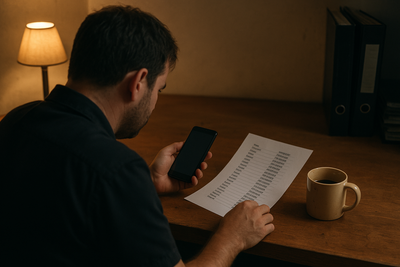
It usually starts at the worst possible time. A line cook calls out 90 minutes before service. The prep list is half done, deliveries are still getting checked in, and a manager is standing in the office dialing through a staff list like it is 2004. One person does not answer. Another sends a text 20 minutes later. A third says maybe, then disappears. Meanwhile, the floor still needs to open.
That old phone tree model was built for a different era. It assumed people answered calls, checked voicemail, and sat near one device. That is not how shift-based work runs now. In restaurants, bars, hotels, and catering operations, the phone tree has become a slow manual process that burns management time and still fails too often when coverage is needed most.
Phone tree callout response is too slow
The biggest problem is simple. Sequential calling takes too long. If a manager has to contact 10 or 15 people one by one, every unanswered call adds delay. Even quick calls stack up fast. Ten attempts at three to five minutes each can eat half an hour before a real candidate is even confirmed.
That delay has a cost beyond inconvenience. During a callout, managers are not just filling a slot. They are also handling vendors, checking stations, calming the front of house, and keeping labor under control. Spending 45 minutes on the phone is not a minor admin task. It pulls leadership away from the operation at the exact moment the operation needs leadership.
Unknown numbers and voicemail kill shift coverage
Most workers no longer treat phone calls as the first place to respond. Unknown numbers get ignored. Voicemail often goes unheard for hours. Even when a manager uses a known number, staff may be asleep, commuting, in class, or simply screening calls on a day off. The phone tree depends on immediate pickup. Modern communication habits do not support that assumption.
Text performs better because it is visible and easy to answer fast. App notifications can work even faster when staff know the alert means available hours. That is why many operators have moved away from voice-first callout processes and toward simultaneous notifications across more than one channel.
One weak link breaks the no-show backup plan
Phone trees look organized on paper, but they are fragile in practice. One missed handoff can collapse the whole chain. If the first few employees do not answer, or if someone forgets to contact the next person, the process stalls. By the time the breakdown becomes obvious, valuable time is already gone.
This is especially risky in operations with specialized roles. A bartender cannot always replace a server. A breakfast line cook may not be the right fit for a late-night grill station. Managers need to reach the qualified backup pool quickly, not just the next name on a generic list.
Scheduling systems need faster callout workflows
Most scheduling tools are good at posting shifts and tracking labor. They are often less effective when the schedule breaks in real time. A callout is not a planning problem. It is a response problem. The operation needs a fast way to alert the right off-duty workers, collect replies, and let a manager choose coverage without chasing people across calls and texts.
That is where simultaneous notification makes practical sense. Instead of dialing down a list, the manager sends one alert to every qualified worker at once. Platforms like Truvex take this approach by sending push notifications and SMS together, so the message reaches staff where they are most likely to see it. Multiple workers can respond, and the manager can select the best fit based on speed, role, and shift needs.
Labor cost suffers when managers guess
When coverage takes too long, bad decisions follow. Managers keep someone on overtime because it is easier than continuing the search. They overstaff another position just to plug the hole. They run short and hope the team can absorb it. None of those options are especially good for service, morale, or labor cost.
A faster response process gives managers more control. The goal is not just filling the shift. The goal is filling it with the right person, before the operation starts making expensive compromises. That requires visibility, speed, and a clear record of who was contacted and who accepted.
The phone tree belongs to another era
The old system survived because there were not many alternatives. That is no longer true. Hospitality operations now run in an environment where staff communicate across text, apps, and mobile alerts, and where managers need answers in minutes, not after a round of voicemail. Some teams still rely on the phone tree out of habit. Habit is not the same thing as process.
Callouts will never stop. No-shows will still happen. The real question is whether the response method matches the pace of the business. In most modern operations, calling down a staff list one person at a time is not a backup plan. It is a delay dressed up as procedure.