July 21, 2026
Why 6 AM Callouts Break Breakfast Shifts
Learn how coffee shops and breakfast spots protect the earliest shift with smarter scheduling, backup coverage, and faster callout response.
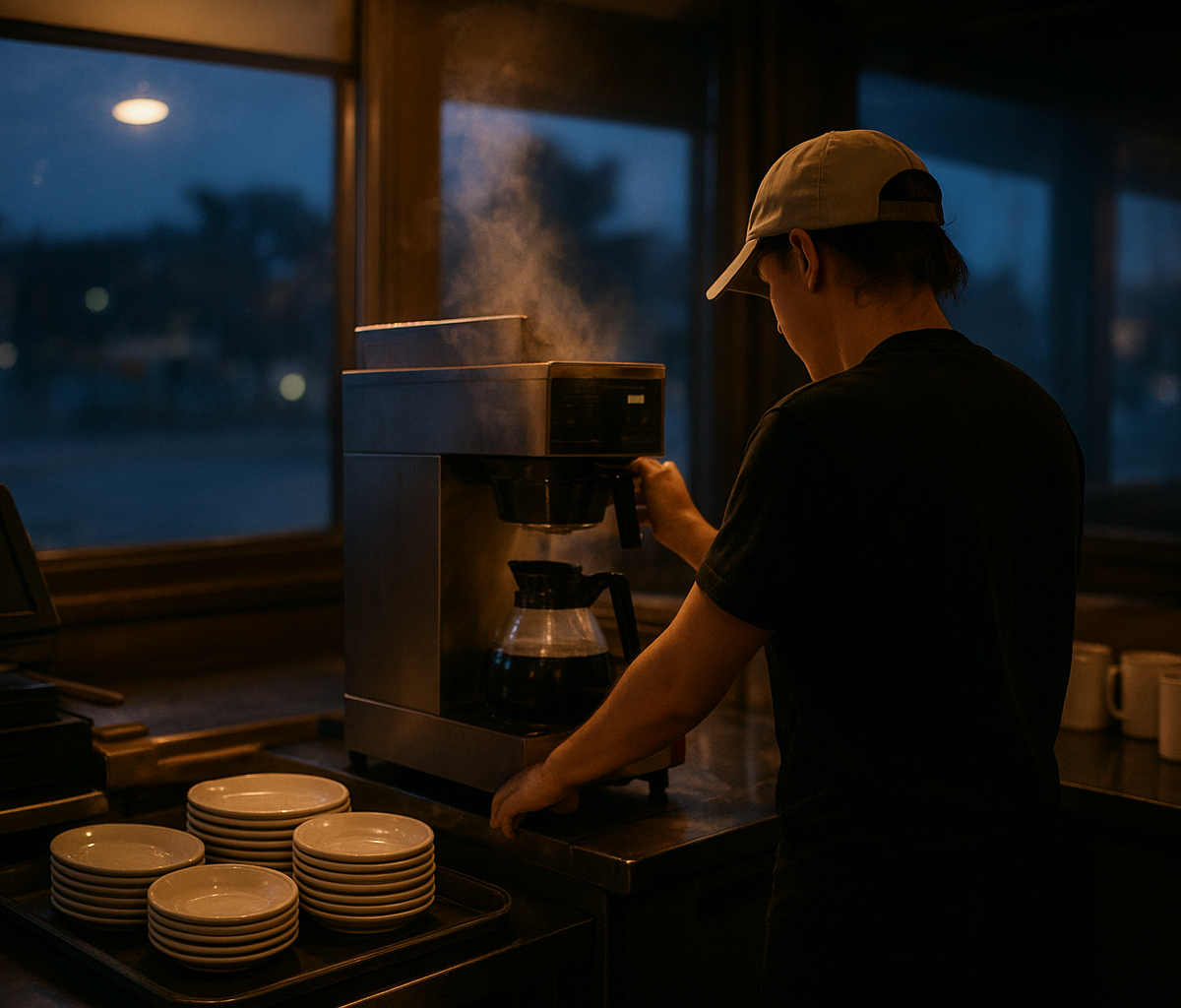
At 6:02 AM, the doors are unlocked, the first mobile orders are already printing, and the opener who was supposed to be on bar is nowhere in sight. That is the moment breakfast operations dread. In a lunch or dinner concept, a no-show can sometimes be patched over for an hour. In a coffee shop or breakfast spot, the damage starts immediately.
The early shift runs on tight timing. Brewers need to be going, pastry cases stocked, prep finished, registers counted, and the first wave of commuters served fast. When one person calls out, or simply does not appear, the problem is not just being short staffed. The problem is that the entire shift structure was built around a narrow opening window with almost no slack.
Why the 6 AM callout hits harder
Breakfast business is front-loaded. A large share of daily revenue can land in a two or three hour stretch, often before 9 AM. That means labor is concentrated early, but usually kept lean to control cost. There is rarely an extra body standing around just in case someone oversleeps.
The coverage window is also brutally short. By the time a manager confirms that an employee is not coming, the rush has already started. Potential replacements may still be asleep, commuting to another job, getting children ready for school, or simply ignoring an unknown number before sunrise. Calling down a contact list one by one is slow, and slow is expensive at that hour.
There is also a skill issue. Not every employee can step into the most exposed station at open. A breakfast line cook who knows egg times, a barista who can handle volume, or a shift lead trusted to open cash and manage the first rush is not easily replaced by whoever happens to answer a phone.
Shift coverage for the most fragile part of the day
Operators that handle early callouts well usually build redundancy before there is a problem. That starts with scheduling. The weakest version of an opening schedule is one where every task belongs to exactly one person. The stronger version overlaps critical skills, even if only for 30 minutes. If the opener on espresso is late, a lead or second opener can hold the station long enough to keep the line moving.
Cross-training matters more in breakfast than many managers want to admit. A cashier who can only ring, or a prep cook who cannot jump on the flat top, creates bottlenecks when the first absence hits. The goal is not to make every employee do everything. The goal is to make sure at least two people on the opening roster can cover each critical function without the whole shift falling apart.
No-show response when nobody answers the phone
Most early morning callout systems fail for a simple reason. They depend on live phone conversations at the exact hour people are least likely to answer. A better approach is broadcast communication. When one opener drops, managers need a way to reach every qualified off-duty worker at once, not after 20 separate calls.
This is where tools like Truvex fit into the picture. Instead of chasing responses one by one, a manager can send a single alert to qualified staff by push notification and SMS. For a 5:30 AM coverage scramble, text message matters. Plenty of workers will not open a scheduling app before sunrise, but they will read a text on the nightstand. The manager still chooses who takes the shift, which helps prevent accidental overstaffing or the wrong person landing in the role.
Scheduling practices that reduce morning rush risk
The best defense is still operational discipline. Managers who regularly struggle with breakfast callouts often find the same weak points: openers scheduled too close to the shift start, no written backup plan for key stations, and too much dependence on one highly reliable veteran employee. That works until it does not.
Several practices tend to reduce the risk:
- Schedule one opening lead slightly earlier than the rest of the team, with authority to reassign stations fast.
- Maintain a short list of employees approved for emergency morning shift coverage.
- Set clear callout deadlines for openers, ideally the night before when possible.
- Review which stations truly need top-skill coverage at open, and which can be simplified for the first hour.
Some operators also trim menu complexity during the first wave if staffing is compromised. That is not ideal, but it is often better than pretending a short team can execute a full menu at full speed.
Labor cost, burnout, and the real price of a callout
The hidden cost of a 6 AM no-show is not just lost sales. It is the burnout that follows. Someone stays late. Someone skips a break. A shift lead works the floor while handling vendor deliveries and customer complaints. By 10 AM, the team is already behind and irritated, and the rest of the day feels heavier than it should.
Breakfast operations do not need perfect attendance to run well. They need systems built for the reality that early shifts are fragile. In this part of the business, speed matters, redundancy matters, and clear communication matters most when the sky is still dark.