July 5, 2026
When Managers Become the Backup Cook
Covering a callout on the line keeps service moving, but the real damage shows up later in scheduling, labor control, and manager burnout.
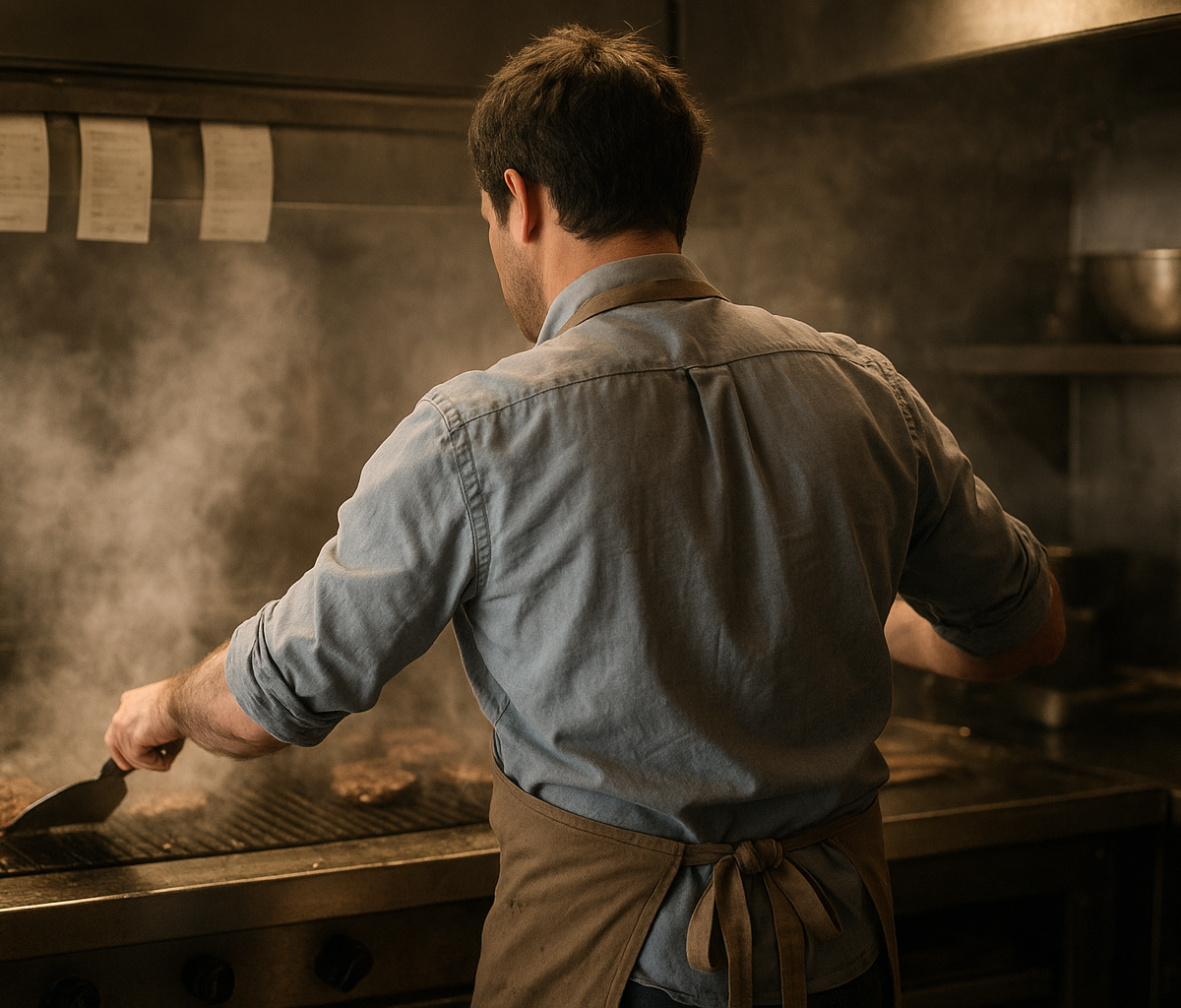
The callout usually hits at the worst possible time. Twenty minutes before prep turns into service. Right as a truck is being checked in. Right when the schedule still is not finished and the weekend forecast needs a hard look. The dishwasher is already behind, one cook is dragging, and then the text comes through, someone is out sick. In a lot of restaurants, the next move is automatic. The manager ties on an apron and jumps on the line.
That decision can save the shift. It can also quietly wreck the week.
The hidden cost of covering a callout yourself
When a manager becomes the default backup cook, the immediate problem gets solved and three larger ones get pushed down the road. Ordering gets rushed or missed. Inventory counts get skipped. The next schedule gets written late, usually with less thought and more errors. Coaching conversations do not happen. Hiring follow-up slips another day. None of that shows up on the ticket rail, but it shows up later in food cost, labor cost, turnover, and preventable chaos.
This is the part many operations underestimate. A manager on the line is not just filling a station. That manager is abandoning every task only a manager can do. The shift may survive, but the business starts paying interest on deferred leadership work.
Why the manager-as-hero model breaks shift coverage
There is also a cultural cost. If the team learns that the boss will always jump in, there is less pressure for the operation to build real shift coverage. Cross-training stays half-finished. Availability records get sloppy. Strong hourly staff are not developed into reliable backups. The system becomes dependent on one person absorbing every shock.
That looks admirable from the outside. Inside the building, it is fragile.
Restaurants and hospitality teams need resilience, not heroics. A resilient operation has more than one person who can work grill, expo, bar, host stand, or close. It has a current list of who is qualified, who wants extra hours, and who can respond quickly. It treats coverage as a process, not a favor.
Better scheduling starts before the no-show
The best response to a no-show starts days earlier, in how the schedule is built. Thin scheduling may protect labor on paper, but it leaves no room for illness, transit delays, school conflicts, or plain fatigue. Managers who constantly end up covering shifts often discover the same pattern, the schedule was technically staffed, but not practically protected.
That does not mean overstaffing every day. It means knowing which shifts are most vulnerable, which stations have only one true closer, and where one callout can force a manager into production. It also means cross-training with intent. Not everyone needs to do everything, but every critical station needs more than one dependable option.
Callout response needs speed, not a phone tree
One reason managers step in so often is simple, finding coverage manually takes too long. Calling down a contact list during a lunch rush is not a system. It is desperation with a clipboard. By the time six people have ignored a text and two more have said no, service has already started.
That is where tools can help, if they match how restaurants actually work. Truvex is one practical example. Instead of the manager becoming the backup plan, the app alerts qualified off-duty workers at once by push notification and SMS, then lets the manager choose from those who accept. The point is not convenience for its own sake. The point is keeping the manager in the management role while coverage comes from someone who is available and opting in.
That kind of process matters because speed changes behavior. If coverage can be mobilized quickly, managers are less likely to default to self-sacrifice as the first solution.
Manager burnout is usually built one shift at a time
No one burns out from one rough Friday. Burnout comes from repetition. Closing because the closer quit. Opening because the opener called out. Working the line because there was nobody else. Then trying to finish invoices at midnight and write the schedule half awake. Over time, the manager stops leading and starts plugging holes.
That is not sustainable, and teams notice it. Standards slip when leaders are stretched too thin to enforce them. Morale drops when every emergency feels normal. Good managers do not leave only because the work is hard. They leave when the role stops being management and turns into permanent emergency coverage.
The strongest operations draw a line. Managers may still step in when the situation truly demands it, but they are not the standing plan for every callout. If a restaurant cannot function without the manager becoming the line cook, the problem is not dedication. The problem is structure.
And structure, unlike heroics, can actually be fixed.