May 14, 2026
Hotel Housekeeping Callout Coverage
Learn how hotels handle last-minute housekeeping callouts before room-turn deadlines slip and delayed check-ins start hitting guest scores.
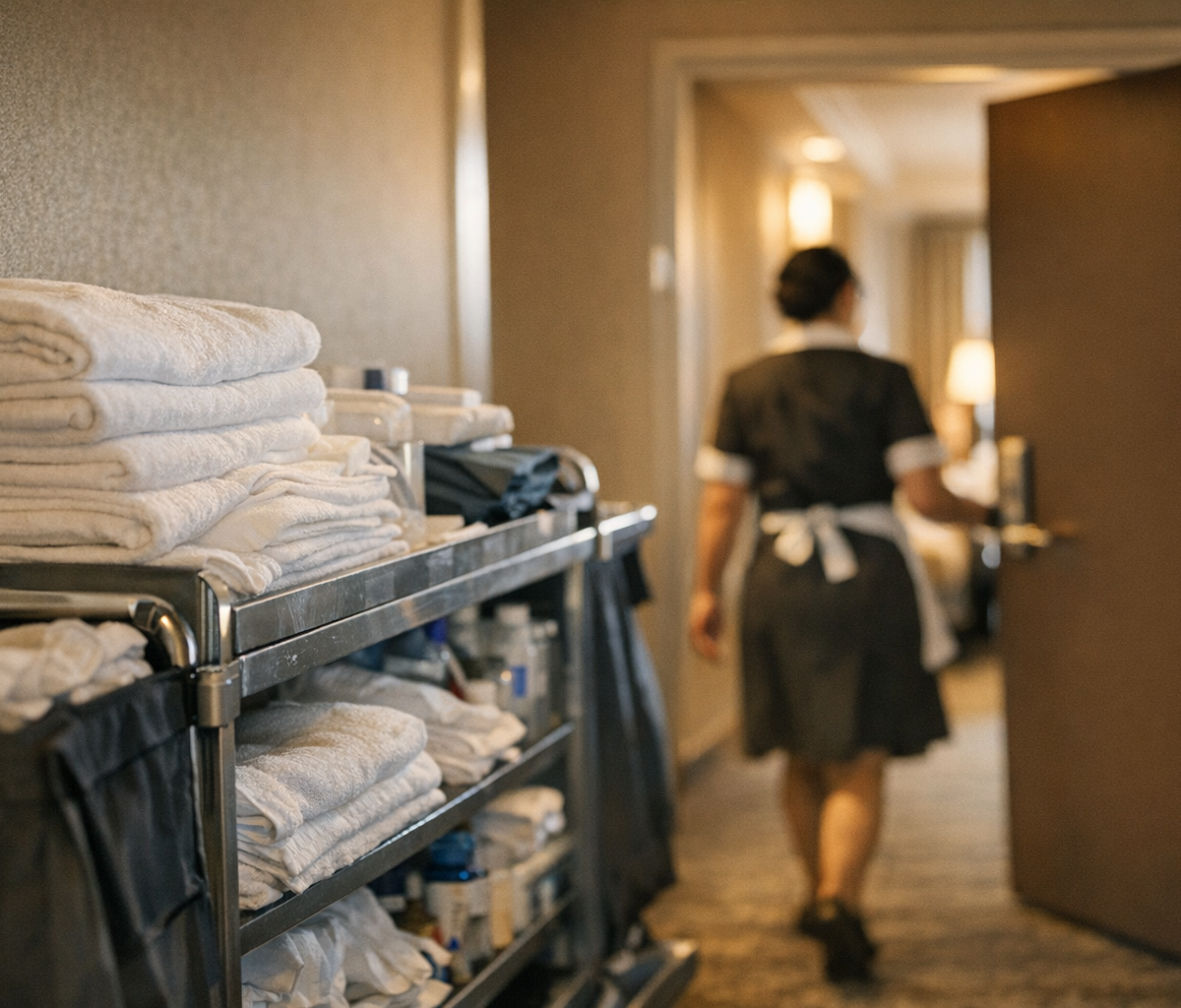
The call comes in at 6:12 a.m. One housekeeper is out sick. On paper, it is one absence. In practice, it can mean 13 or 14 rooms not turned by midafternoon, front desk agents stalling early arrivals, and a general manager watching service scores slide before lunch.
Hotels feel housekeeping callouts differently than most operations because the work sits inside a narrow, unforgiving window. Checkout ends at 11. Check-in starts at 3. Those four hours carry the revenue for the night. If rooms are not cleaned, inspected, and released on time, the inventory is effectively blocked.
Why hotel shift coverage breaks down fast
Standard shift coverage habits often fail in housekeeping. Managers start texting a few reliable people, then call a temp agency, then ask whoever is already on the board to take extra rooms. That approach burns time, and time is the one thing the department does not have.
Housekeeping is also not easily interchangeable labor. A replacement needs to know room standards, linen flow, chemical handling, key control, and how the property stages departures versus stayovers. In branded hotels, the inspection standard is tight. In independent properties, the pace is often even less forgiving because teams run lean. Either way, a warm body is not the same as a trained housekeeper who can step in and clear a board without creating rework.
How to handle a housekeeping callout before 7 a.m.
The strongest hotels treat callouts as an operational trigger, not an improvisation exercise. The moment an absence is confirmed, the manager should know three things: how many departures are on the board, which room types are most critical to release first, and which qualified off-duty staff can realistically get on property in time.
That last part matters more than many managers admit. Calling people one by one is slow and usually favors the same small group, which creates fatigue and resentment. A broader broadcast works better. Some properties now use tools such as Truvex to alert all qualified off-duty housekeepers at once by push notification and SMS, so multiple workers can respond quickly and management can lock in coverage while the day is still recoverable.
The goal is not just filling the shift. The goal is protecting the room-turn sequence early enough that supervisors are not forced into bad tradeoffs at noon.
Room-turn scheduling matters more than perfect staffing
Even with a replacement confirmed, the board still needs to be rebuilt. That means reassigning floors based on departure density, pairing stronger attendants with heavier sections, and pushing inspectors toward premium room types and early arrivals first. Good managers do not spread the pain evenly. They prioritize what gets sellable inventory back first.
In many hotels, that means cleaning king standards and double queens before tackling low-demand room types, or moving stayovers later if the departure board is heavy. Laundry and public area support may also need temporary reassignment for two hours. None of this is ideal. It is simply better than letting the whole operation drift.
Reducing no-show risk in housekeeping coverage
One problem with last-minute coverage is that an accepted shift is not always a worked shift. Hotels that improve response rates usually do a few basic things well. They keep an updated list of cross-trained attendants, make start times clear, confirm pay rules for emergency pickups, and avoid vague messages like "Can anyone help today?" Specific offers get faster answers.
It also helps to build a bench before the crisis. Part-time staff, former seasonal workers, and cross-trained housepersons can all play a role if they are kept current on standards. Some properties create a small on-call rotation for peak departure days, especially around weekends, group business, and holiday turnover. That costs something, but delayed room release costs more.
Labor cost versus lost room revenue
Managers sometimes hesitate to approve overtime or premium pickup pay for a housekeeping callout. That is understandable, but the math is usually straightforward. If one absence blocks a dozen rooms from being released on time, labor savings disappear quickly. The real comparison is not extra wage cost versus doing nothing. It is extra wage cost versus delayed check-ins, comped nights, stressed front desk staff, and rooms sitting unsold because the turn never caught up.
Hotels rarely get in trouble from paying a little more to protect inventory on a high-pressure day. They get in trouble when they react too slowly and spend the rest of the shift chasing a missed window.
Housekeeping callouts will never stop. People get sick, buses run late, and life happens before sunrise. The properties that hold up best are not the ones that avoid disruption. They are the ones that can absorb it fast enough to keep rooms moving and guests unaware of the scramble behind the service hallway doors.