May 13, 2026
Black Friday Staffing When Coverage Breaks
Learn how retailers handle Black Friday callouts, peak traffic gaps, and scheduling law risks without losing control of labor costs.

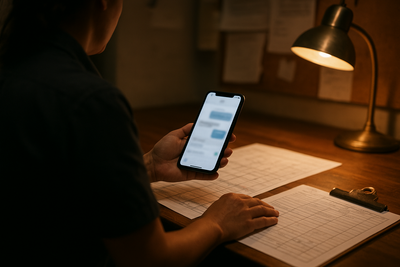
At 4:07 a.m., the text comes in. A cashier scheduled for the 5 a.m. door-buster shift is sick. Another associate is stuck out of town after Thanksgiving. The line outside is already forming, the stock team is halfway through setup, and nobody has time for a phone tree. This is where Black Friday staffing plans stop being theory and turn into damage control.
Retail has always known Black Friday is not a normal trading day. Traffic spikes fast, customer patience runs thin, and one missing person in the wrong position can slow the whole floor. A single callout at the front end can back up checkout. A no-show in fulfillment can wreck buy online, pick up in store timing by mid-morning. The problem is not just being short staffed. It is being short staffed in the exact hour when the building is least able to absorb it.
Black Friday staffing pressure starts before the doors open
The staffing problem on Black Friday is built on a contradiction. Stores need maximum coverage on a day when many associates want time with family, need travel flexibility, or are already stretched by extended holiday hours. Large chains try to offset that pressure with blackout dates, attendance incentives, standby lists, and aggressive seasonal hiring. Independent retailers often have fewer layers to work with, which means every absence hits harder.
Even well-built schedules can fail. Seasonal workers may still be learning the floor. Cross-training often looks better on paper than it does at 6 a.m. when the returns desk suddenly needs backup and the person listed as flexible has never handled the POS under pressure. Black Friday exposes every weak point in workforce planning, especially any gap between scheduled headcount and actual usable coverage.
What a Black Friday callout really costs
Managers tend to feel the pain of a callout immediately, but the real cost spreads further than one open shift. When coverage breaks down, experienced associates get pulled from selling to run registers. Supervisors stop leading and start plugging holes. Recovery tasks fall behind. Fitting rooms pile up. Shelf conditions slip. Customers notice all of it.
Labor cost also gets messy in a hurry. The standard response is overtime, split shifts, extended shifts, or pulling in whoever answers first. Sometimes that is necessary. It is also expensive, and on a day with tight sales expectations, panic scheduling can erase margin fast. The more chaotic the response, the more likely a store is to overcorrect in one department while leaving another exposed.
Shift coverage needs speed, not a phone chain
The old approach to shift coverage is still common. A manager starts calling people one by one, hoping someone picks up before the store gets slammed. On Black Friday, that process is too slow. Associates are asleep, driving, wrangling family plans, or simply screening calls before dawn. By the time enough people have been contacted, the peak may already be underway.
That is why many operators are moving toward group-based callout response systems. Instead of relying on one manager to manually chase coverage, the opening gets sent to a pool of qualified off-duty workers at once. In retail, speed matters more than elegance. If a stock associate calls out before truck processing or a cashier drops before open, the goal is simple, get options on the table fast. Tools like Truvex fit into that reality by notifying available team members in real time through push and SMS, which gives managers a better chance of filling the gap before traffic hits.
Predictive scheduling laws complicate last-minute changes
Holiday staffing pressure also runs into compliance risk. In jurisdictions with predictive scheduling laws, last-minute schedule changes may trigger reporting pay, predictability pay, or documentation requirements. Rules vary by city and state, but the operational point is the same. A rushed fix can create legal and payroll consequences if managers are not careful.
That does not mean stores cannot respond to genuine callouts. It means the response needs structure. Managers should know when voluntary shift acceptance is allowed, how schedule changes must be recorded, and whether premium pay applies. A fast coverage process is only useful if it also leaves a clear trail. This is another area where digital systems help, not because they solve compliance on their own, but because they reduce the informal texting and verbal swaps that become hard to verify later.
Scheduling for peak traffic means building backup into the plan
The best Black Friday staffing plans assume something will go wrong. They do not schedule to the minimum needed if every person shows up and every task runs on time. They build in role redundancy at the front end, designate backup openers, and cross-train around pressure points like checkout, fulfillment, and customer service. They also define who has authority to approve swaps, call in reserve staff, or reassign labor by the hour.
None of this removes the stress of the day. Black Friday is still a test of preparation, leadership, and luck. But stores that treat shift coverage as an operational system, not a last-minute scramble, usually hold up better when the first callout lands before sunrise. On the busiest day in commerce, staffing is not just about having enough people in the building. It is about having a plan that survives contact with reality.