May 7, 2026
How One Callout Wrecks the Week
See how one missed shift turns into overtime, burnout, and more callouts, and why fast shift coverage keeps the rest of the week intact.
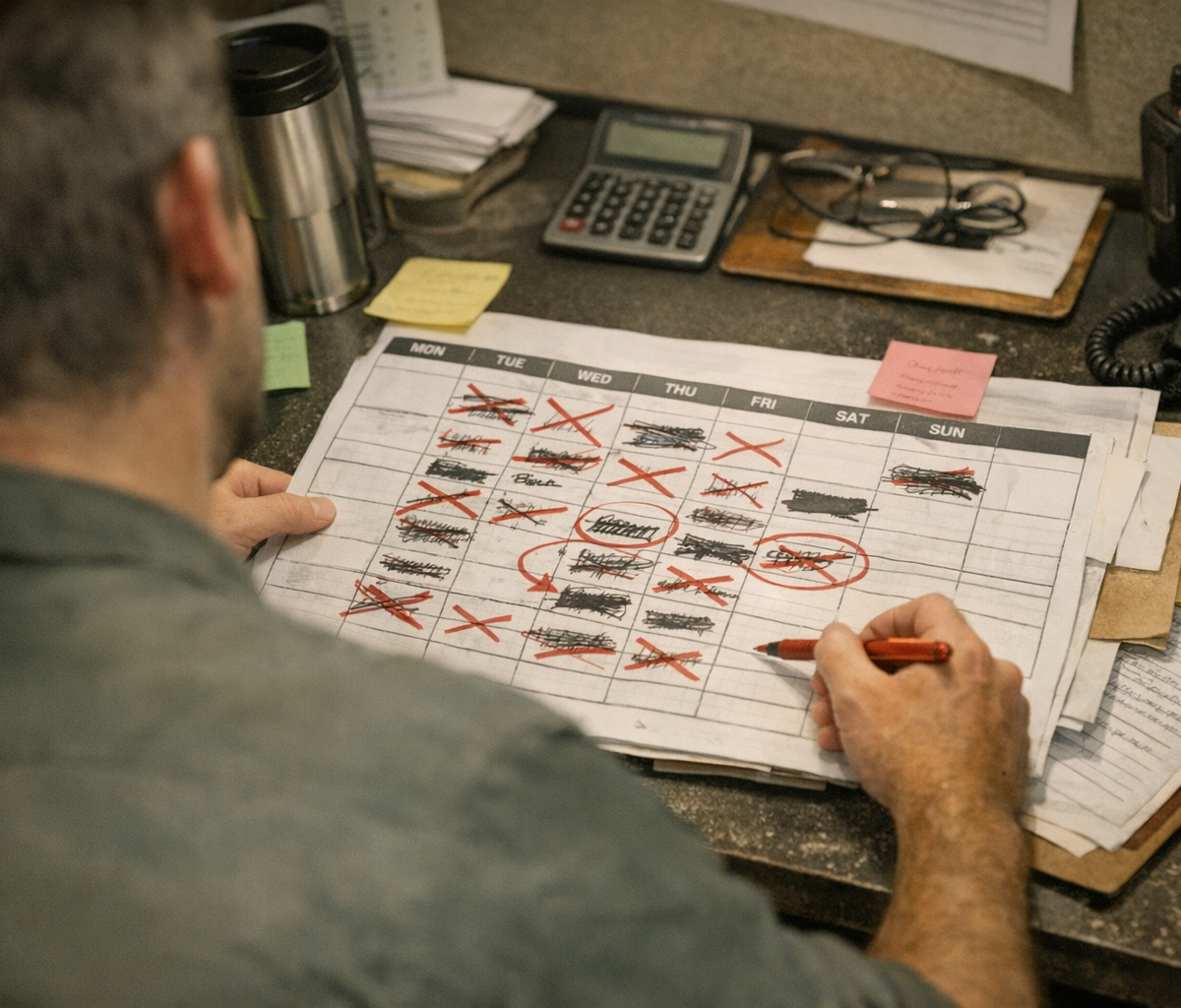
It usually starts before lunch on a Monday. A text comes in. Someone is sick, stuck with childcare, or simply not showing up. The shift still has to run, so a manager starts calling around. One line cook stays late. A server picks up a double. The day gets covered, barely. By Thursday, the schedule is in worse shape than anyone expected.
That is the part many operators know too well. A single callout rarely stays contained to one shift. It changes hours, breaks labor targets, strains the same reliable employees, and creates new gaps later in the week. The real damage is not the first absence. It is the chain reaction that follows when coverage takes too long or comes from the wrong place.
Why one callout becomes a scheduling problem
Most restaurant schedules are built tight. Labor cost is watched closely, availability is limited, and only a handful of people can work each station without slowing service. When one person drops out, the fastest fix is often to extend whoever is already on the floor or pull in the same dependable backup worker who always says yes.
That solves the immediate problem, but it creates a new one. Extra hours on Monday can push that employee toward overtime by Friday. A double shift can leave someone dragging through the next service. If the replacement had originally been scheduled off for recovery, family obligations, or school, that buffer disappears. The schedule may still look complete on paper, but it is already less stable.
Shift coverage decisions that raise labor cost
Managers often focus on filling the empty slot in front of them. Understandably so. Guests are arriving, prep is behind, and the team on site needs help now. But the source of that coverage matters. Pulling a scheduled employee into extra hours is different from bringing in a qualified off-duty worker who can absorb the shift at regular pay.
That distinction affects the rest of the week. Overtime is the obvious cost, but there are quieter costs too. Tired staff make more mistakes. Breaks get skipped. A supervisor spends another hour reworking the roster. Morale slips when the same names keep getting tapped to rescue every problem. In many operations, the labor hit from one callout is spread across several days, not one shift.
The no-show and burnout cycle
There is a reason callouts seem to cluster. Burnout is contagious in shift-based operations. Once a few employees start carrying extra weight, patience gets shorter and reliability gets shakier. The backup dishwasher who covered Tuesday may be the person calling out Thursday. The bartender who stayed late twice may come in Friday already exhausted.
This is how the domino effect builds. One absence leads to one rushed fix. That fix adds fatigue, payroll pressure, and resentment. Then a second gap appears, often caused indirectly by the first. By then, managers are not just covering a callout. They are managing the consequences of the previous coverage choice.
Why speed matters most in a callout
The first hour after a callout is usually where the week is won or lost. Fast coverage gives managers access to the widest pool of options. Wait too long, and the practical choices narrow. Off-duty workers make other plans. Commute windows close. The only remaining solution is to lean on whoever is already working.
That is why speed is not just a convenience. It is a control point. When a qualified replacement is found quickly, the shift can be filled without distorting the rest of the schedule. Tools like Truvex are useful in this specific moment because they notify all qualified off-duty workers at once, instead of forcing a manager into a slow one-by-one calling chain. The value is not the alert itself. The value is stopping the first bad workaround before it turns into three more.
Scheduling practices that prevent the next callout
Operators that handle callouts well tend to follow a few consistent patterns. Cross-training is part of it, but so is maintaining a real-time view of who is off, who is approaching overtime, and who can step into a role without creating another hole elsewhere. Coverage should be based on total weekly impact, not just immediate availability.
Clear callout procedures matter too. Employees should know exactly how to report an absence and how open shifts are offered. Informal group chats and last-minute personal favors may work in small teams, but they break down fast under pressure. A structured process reduces delay, favoritism, and confusion.
Some operations use Truvex for that reason, as a practical way to reach available workers fast and keep coverage inside the off-duty pool. That approach helps preserve the original schedule instead of patching it with overtime and hoping the week holds together.
Most scheduling chaos does not come from one sick day. It comes from treating the first gap like an isolated event. In restaurants and hospitality, one rushed decision has a way of showing up again two days later, usually at the worst possible time. The operators who stay ahead of it understand a simple truth, the fastest clean coverage is often the cheapest and the calmest option in the building.