June 21, 2026
2026 Predictive Scheduling Rules for Restaurants
Learn how advance posting, premium pay, and callout coverage rules affect restaurant labor decisions in 2026 and what managers should document.
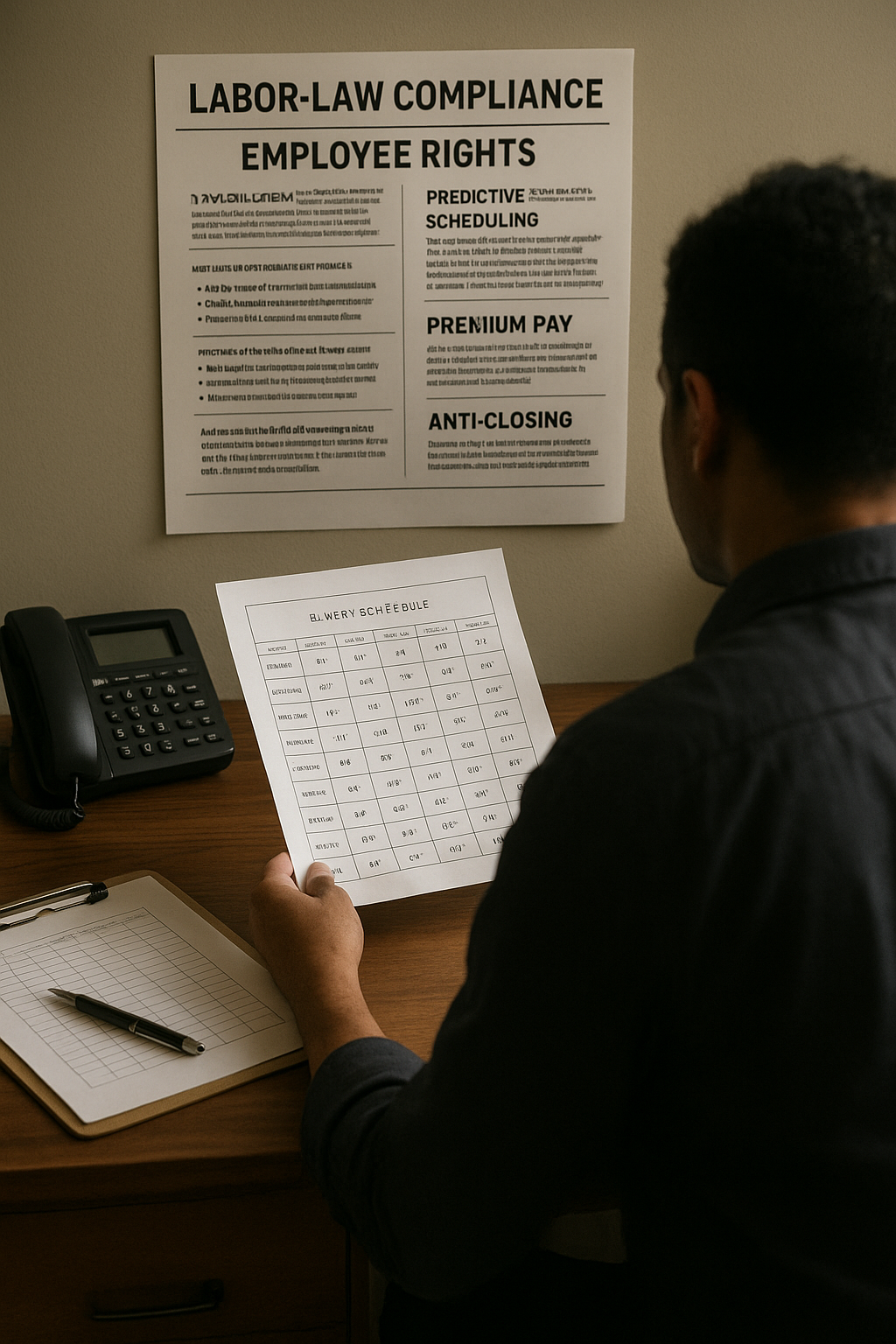
The dinner rush is two hours out, a line cook calls in sick, and the schedule on the wall suddenly becomes a legal document. In 2026, that is the reality for restaurant managers operating under predictive scheduling laws. A last-minute scramble that once felt like normal shift management can now trigger premium pay, documentation problems, or employee complaints if handled badly.
These laws, sometimes called fair workweek laws, are no longer limited to a few closely watched cities. Oregon, New York City, Chicago, Seattle, San Francisco, Philadelphia, Los Angeles, and other jurisdictions have put rules in place that affect how schedules are posted, changed, and enforced. The details vary, but the pattern is clear. Managers are expected to give workers more predictability, more notice, and more control over unscheduled time.
What predictive scheduling laws usually require
Most restaurant managers already know the headline rule, schedules must often be posted 14 days in advance. That is only the starting point. Many laws also require premium pay when an employer changes a shift after the posting deadline. Some restrict clopening practices, meaning a worker cannot be scheduled to close late and open early without enough rest between shifts. Others give employees the right to decline added hours or changed shifts without retaliation.
This matters because not every schedule change is treated the same way. If management cuts a shift, extends a shift, moves a start time, or adds hours at the last minute, compensation rules may apply. If an employee voluntarily asks for a change or agrees to pick up an open shift, the legal treatment can be different. That distinction is where many compliance mistakes happen.
Callout coverage and the difference between voluntary and imposed changes
A same-day callout is where policy meets real life. The manager still needs coverage. Guests still show up. The kitchen still has to run. But under predictive scheduling rules, the response to that callout has to be handled carefully.
The safest approach is to treat open-shift coverage as a voluntary opportunity, not a pressured assignment. That means notifying qualified off-duty staff, making clear that acceptance is optional, and documenting who opted in. A text thread full of half-answers and missed messages is not much of a compliance record. If a worker later says the shift was imposed or that declining would have hurt future scheduling, the burden often shifts back to the employer to show what actually happened.
That is one reason some operators use tools like Truvex. When a callout creates a gap, the platform records the coverage request, the fact that workers were notified, and the employee's voluntary acceptance. In jurisdictions where the source of the schedule change matters, that kind of trail can help show the shift pickup was employee-initiated rather than manager-imposed.
Scheduling practices that reduce premium pay risk
Compliance starts before the callout. Restaurants that constantly run with no bench create their own legal exposure. A schedule built at bare minimum staffing leaves no room for illness, transit delays, or family emergencies. Then every disruption turns into a last-minute change.
Managers can reduce that risk by building a realistic relief plan into the weekly schedule. Cross-training matters here. A server who can host, a prep cook who can work the line, or a bartender who can cover service well during early volume gives the operation options without rewriting the whole day. Availability records also need to be current. Offering a shift to someone who has already said they cannot work that day wastes time and muddies the record.
It also helps to separate three categories clearly: employer-initiated changes, employee-requested swaps, and voluntary open-shift pickups. Those are not just operational labels anymore. In many markets, they carry different compliance consequences.
No-show documentation and manager communication
Predictive scheduling compliance is not only about what happened, but what can be proven later. Managers should document when the original employee called out, when the open shift was posted or offered, who received the notice, and who accepted. If premium pay was triggered, payroll needs that information quickly. If a worker declined the shift, that should not affect future treatment.
Training matters as much as software. A strong policy can still fail if a shift lead pressures someone with phrases like, “Need this covered, reply ASAP,” or “Everyone has to help out.” Under these laws, tone matters. So does consistency. Staff should hear the same message every time, the shift is available, acceptance is voluntary, and declining it carries no penalty.
Truvex fits into that process as one operational tool, not a substitute for policy. The harder part is managerial discipline, building schedules with enough foresight, keeping records straight, and treating last-minute coverage as a compliance issue as much as a staffing issue.
Labor cost is no longer the only scheduling concern
For years, restaurant scheduling was mostly about sales forecasts and labor percentage. In 2026, legal exposure belongs on that same worksheet. A schedule that looks efficient on paper can become expensive fast if it relies on constant short-notice changes.
The operators adapting best are not necessarily the ones with the biggest teams or budgets. They are the ones treating scheduling as a system instead of a weekly fire drill. Predictability has become part of the job. Managers who still handle callouts like it is 2018 may find out the hard way that the rules changed long before the shift did.