August 4, 2026
How Shift Coverage Tools Evolved in Restaurants
See why phone trees, group texts, and Messenger break under pressure, and what restaurants need from a shift coverage system that holds up.
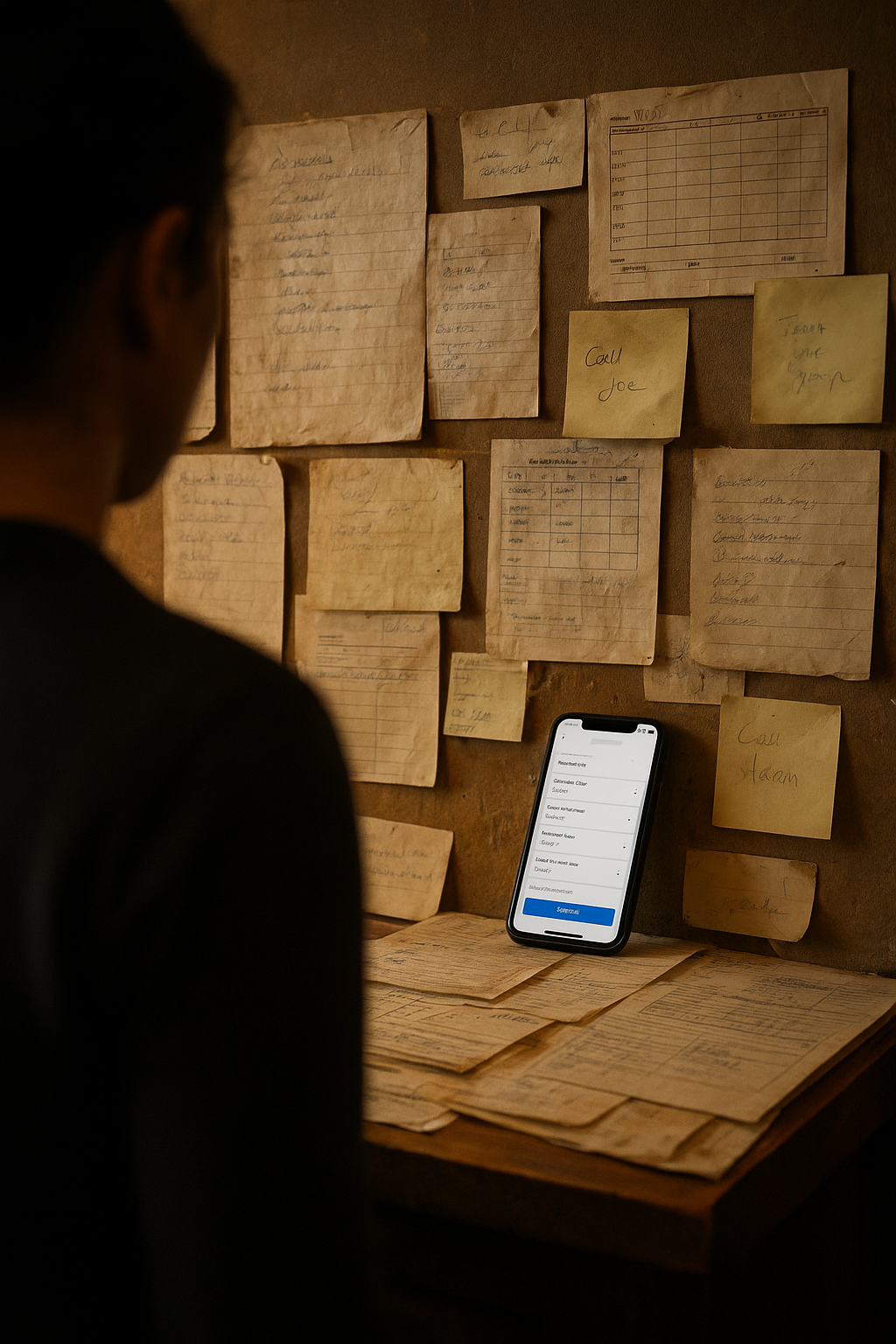
At 4:17 p.m., the text comes in. A line cook is sick. The dinner rush starts in less than two hours. One manager starts scrolling through contacts, another digs for an old paper availability sheet, and someone says they already posted in the group chat. This is how shift coverage often works in restaurants, not because anyone thinks it is a good system, but because it is the system that grew out of whatever was available at the time.
Most operations do not land on a clean process from day one. They patch one together. Then they patch the patch. Over time, the coverage process usually follows a familiar path, from handwritten call lists to text threads to social apps, and eventually to a tool built for one job only, filling a last-minute callout before service starts falling apart.
When the callout process lived on paper
For years, many restaurants handled callouts with a printed phone list taped near the office desk. Managers called people one by one, often in order of who had helped before, who lived nearby, or who was known to answer. It was slow, but in smaller teams it could work. The problem was not the paper itself. The problem was time.
A dinner shift does not wait while ten calls go to voicemail. Paper lists also age badly. Numbers change. Availability shifts. New hires get added in pen, then crossed out, then rewritten. Once the list stops being trustworthy, managers stop relying on it, and the process gets even more improvised.
Group texts solved speed, then created new scheduling problems
Group texting felt like progress because it replaced one-to-one calling with a single message. In many restaurants, this became the default move for no-show and callout coverage. Send a blast, wait for replies, hope someone can take it.
It works until the thread gets messy. People reply all with side conversations. Someone says maybe. Someone else says yes, then stops answering. Another employee sees the message an hour later and assumes the shift is still open. Managers end up doing the same follow-up work anyway, just inside a noisier channel.
There is also the fairness issue. In a group text, the fastest response is not always the best coverage option. A manager may need the server with bar experience, the prep cook already trained on that station, or the employee who will not trigger overtime. Group texts move fast, but they do not organize decisions well.
Facebook Messenger and chat apps became the backup shift coverage system
Then came Messenger, WhatsApp, and other chat apps. For some teams, these felt more natural than text. Staff already used them socially, notifications were easy to spot, and managers could create role-specific chats for front of house or back of house coverage.
Again, the system worked until pressure exposed the cracks. Not every employee wanted work requests mixed into personal apps. Some muted the chat. Some never checked message requests. Others were in too many threads to notice one urgent post. Chat apps are built for conversation, not for documenting who is qualified, who accepted first, or who the manager selected.
That distinction matters. Shift coverage is not just communication. It is a decision workflow with labor, training, and service consequences attached to it.
What restaurants actually need from a callout solution
By the time operators say they have tried everything, what they usually mean is that they have tried every general-purpose communication tool available. The missing piece is not another place to send messages. It is a process built around the realities of restaurant scheduling.
A workable callout system needs to do a few basic things reliably. It should alert qualified off-duty staff fast. It should reach people where they actually respond, which often means more than one channel. It should let multiple employees accept without creating confusion. And it should leave the final choice with the manager, who still has to balance skill, labor cost, and shift fit.
That is the gap purpose-built tools are trying to fill. Truvex, for example, is designed around the last-minute callout itself rather than broader scheduling features. A manager taps once, qualified off-duty workers get a push notification and SMS, multiple people can accept, and the manager chooses who covers. It is a simple workflow, but that simplicity matters when service is an hour away and no one has time to referee a group chat.
Better no-show coverage usually comes from simpler systems
The lesson in most coverage journeys is not that earlier methods were foolish. They were practical for the stage the restaurant was in. A ten-person team can survive on texts longer than a forty-person operation can. A single-unit cafe can tolerate more improvisation than a busy multi-location group.
But eventually, every restaurant hits the same wall. When the coverage process depends on memory, personal favors, and scattered messages, managers spend too much energy chasing responses instead of running the floor. That cost does not always show up in payroll reports, but it shows up in late tickets, stressed teams, and managers burning out over problems that should have a cleaner fix.
Restaurants have always been good at making do with whatever tools are on hand. The harder question is whether the tool still fits the job. When a callout turns into a scramble every single time, that is usually the answer.