September 27, 2026
Why Restaurants Delay Tech Until a Callout Hits
Small restaurant owners resist new tools for good reasons. Here is what finally makes practical operators adopt scheduling and coverage tech.

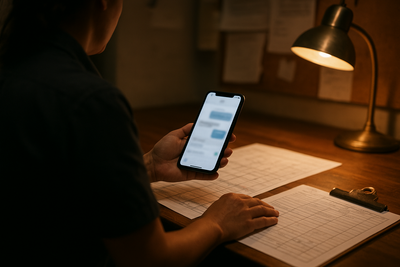
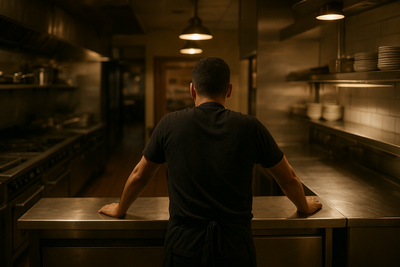
The resistance usually looks stubborn from the outside. It rarely is. A small restaurant owner is standing in the office at 4:12 p.m., one line cook just called out, the dinner rush starts in less than an hour, and somebody is pitching a new app. In that moment, technology does not sound like progress. It sounds like one more thing to learn while the building is already on fire.
That is why many independent operators delay adopting new systems until a very specific kind of pain becomes impossible to ignore. Not because they are behind, but because most have been burned before. They have paid for software nobody used, sat through demos that solved the wrong problem, and dealt with integrations that created more work than they removed.
Why small restaurant owners resist new tech
The most common barrier is cost, but cost is usually shorthand for something bigger. Owners are not only asking what the monthly fee is. They are asking whether the tool will actually save a shift, reduce manager stress, or prevent overtime. If the answer is vague, the expense feels unnecessary.
Reliability is the next issue. In restaurants, a tool does not get judged in ideal conditions. It gets judged on a Friday night when the host is in the weeds and a dishwasher does not show. If the app is slow, confusing, or dependent on a complicated setup, trust disappears fast.
Training time matters too. Small teams do not have spare hours for manuals and rollout meetings. Most operators need something staff can understand in minutes, not after a week of reminders. POS integration creates another layer of hesitation. Many restaurant managers have learned the hard way that once a vendor says "simple integration," the real work often lands on the restaurant.
The callout problem changes the math
Operators often live with inefficient systems longer than expected, right up until one recurring problem starts costing real money. Shift coverage is one of those problems. A callout does not stay contained. It ripples into slower ticket times, frustrated guests, missed breaks, manager overtime, and in some cases, closed sections or reduced menus.
That is usually the moment the math changes. A manager who would never spend on another scheduling tool may suddenly adopt a coverage tool after one brutal weekend of texting ten people individually, waiting for replies, and still ending up short. The trigger is rarely abstract interest in innovation. It is usually one avoidable operational mess too many.
Shift coverage tools get adopted when they remove steps
The tools that finally win over skeptical operators tend to have one thing in common. They do not ask the restaurant to rebuild its workflow. They remove friction from a problem the team already understands.
That is where simple coverage systems tend to land better than broad all-in-one platforms. If a manager can open an app, alert qualified off-duty workers, and fill a shift without chasing individual texts, the value is obvious on day one. Truvex fits that pattern. There is no POS integration requirement, no long onboarding process, and no need to train the whole staff on a new operating system. The appeal is not novelty. The appeal is that the next callout can be handled with one button instead of a phone tree.
Scheduling technology fails when it asks too much
There is a reason some operators adopt one narrow tool and ignore five others. Restaurant teams do not resist technology itself. They resist disruption without payoff. A system that demands weeks of setup, changes established scheduling habits, or creates another login for every employee starts with a trust deficit.
By contrast, adoption tends to stick when the first use case is immediate and concrete. Cover a missed shift. Reduce manager phone time. Get responses from available staff quickly. Once a tool proves itself under pressure, skepticism drops. Staff use it because it helps. Managers keep it because it works when the day goes sideways.
What finally convinces hesitant operators
In most cases, the turning point is not a sales pitch. It is a bad night. A no-show during brunch. A same-day sick call before a holiday service. A manager covering the floor personally because nobody answered texts in time. Those moments expose the real cost of doing things the old way.
After that, the standard for adoption becomes simple. The tool must solve one expensive problem without creating three new ones. That is why straightforward products often get further in small restaurants than feature-heavy platforms. Truvex is one example of that approach, built for operators who want a practical fix rather than another system to manage.
Small restaurants do not need more technology for its own sake. They need fewer failure points during the busiest hour of the day. The tools that survive in this business are usually the ones that respect that fact.