September 22, 2026
Why Group Texts Fail for Shift Coverage
Learn why group chats break down during callouts and what managers can use instead to get faster shift coverage with less confusion.
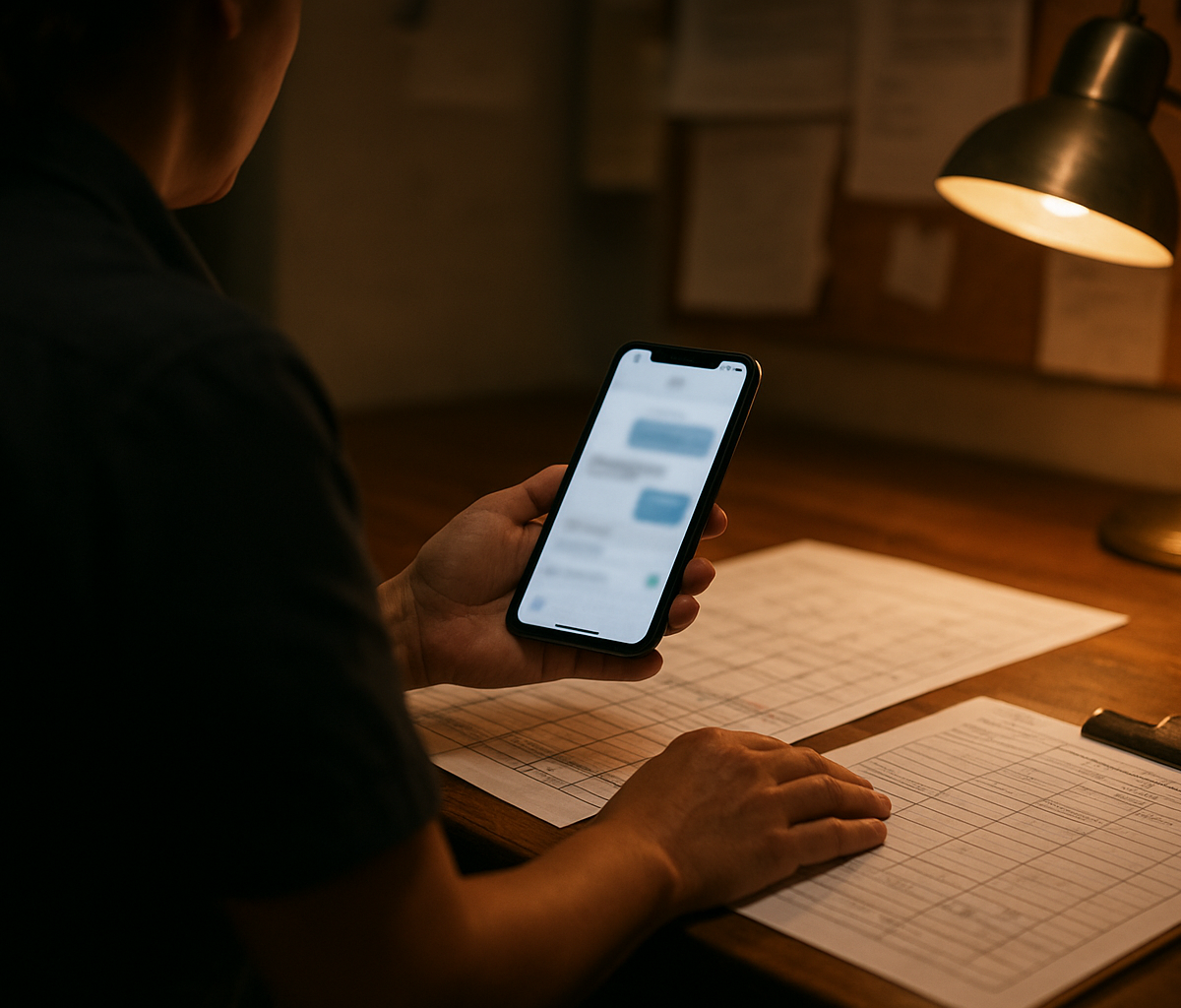
It usually starts at the worst possible time. A server calls out two hours before dinner. The manager opens a 30-person group chat and sends the standard message: who can cover tonight? Then the waiting starts.
Half the staff never sees it because notifications are buried. A few are on the wrong thread because iPhone and Android messages split. Most read it and assume someone else will answer. Then, twenty minutes later, three people respond at once, one unqualified, one already close to overtime, and one who can only work half the shift. What looked like the fastest option turns into another management problem.
Group texts survive in restaurants because they are familiar, not because they work. In shift-based operations, especially during callouts, they create confusion at the exact moment a clear process matters most.
The group text problem during a callout
On paper, a group chat feels efficient. One message reaches everybody. In practice, it creates two different failures, mechanical and social.
The mechanical failure is straightforward. Messages get buried under memes, schedule swaps, and side conversations. Staff members mute the thread because it never stops buzzing. Phone settings differ. Some workers receive SMS, others use iMessage, and mixed-device threads often break apart. Managers end up chasing replies across separate conversations, screenshots, and direct texts. There is no clean record of who saw the request, who accepted, and who is actually available.
The social failure is harder to spot, but it is usually worse. When a request goes to a large group, responsibility gets diluted. This is the bystander effect in a work setting. Each person assumes someone else is more likely to take it, more available, or already responding. So nobody moves quickly. A message sent to 30 people can produce less action than a message sent to five relevant people.
Why no-show and shift coverage requests stall out
Managers often read silence in a group chat as lack of interest. That is not always accurate. Silence often means uncertainty. Staff may not know whether the shift is still open, whether they are actually needed, or whether replying will start a back-and-forth negotiation. In busy restaurants, people avoid friction. If accepting a shift means ten more messages and a scramble over details, many simply ignore the thread.
There is also a fairness issue. Group texts tend to reward whoever happens to see the message first, not whoever is best suited to cover. That can lead to avoidable labor cost problems, skill mismatches, or resentment from stronger employees who feel they are always being tapped at the last minute.
Over time, this wears on the team. The group chat stops feeling like a communication tool and starts feeling like background noise mixed with low-grade pressure.
What better scheduling communication looks like
Restaurants generally handle last-minute coverage better when the process is structured. The request should go only to workers who are actually qualified for the role, not every person on payroll. It should be clear that the shift is available, what hours need coverage, and when the manager needs an answer. Responses should be tracked in one place. Most important, more than one employee should be able to accept without creating chaos, because the manager still needs room to choose the best fit.
That is where dedicated shift coverage tools tend to outperform group chats. Truvex, for example, sends a targeted notification by push and SMS to qualified off-duty workers, records who accepts, and lets the manager select the cover without the thread spiraling out of control. The value is not just speed. It is clarity.
Reducing turnover starts with less scheduling chaos
Scheduling systems shape culture more than many operators realize. When coverage requests feel random, urgent, and disorganized, staff members experience them as stress. When requests are targeted and transparent, they feel more like normal operations. That difference matters.
Employees are more likely to stay in workplaces where expectations are clear and communication is controlled. Managers are more likely to make better labor decisions when they are not sorting through twenty text replies while also running service.
There will always be callouts. There will always be no-shows, late buses, sick kids, and Friday-night surprises. The issue is not whether those problems can be eliminated. The issue is whether the process for handling them adds more damage than the original problem. In many restaurants, the group text has quietly become part of the breakdown.