August 25, 2026
What One Missing Server Really Costs
See how one server callout cuts covers, slows turns, lowers checks, and hurts reviews, with a practical way to estimate the real revenue loss.
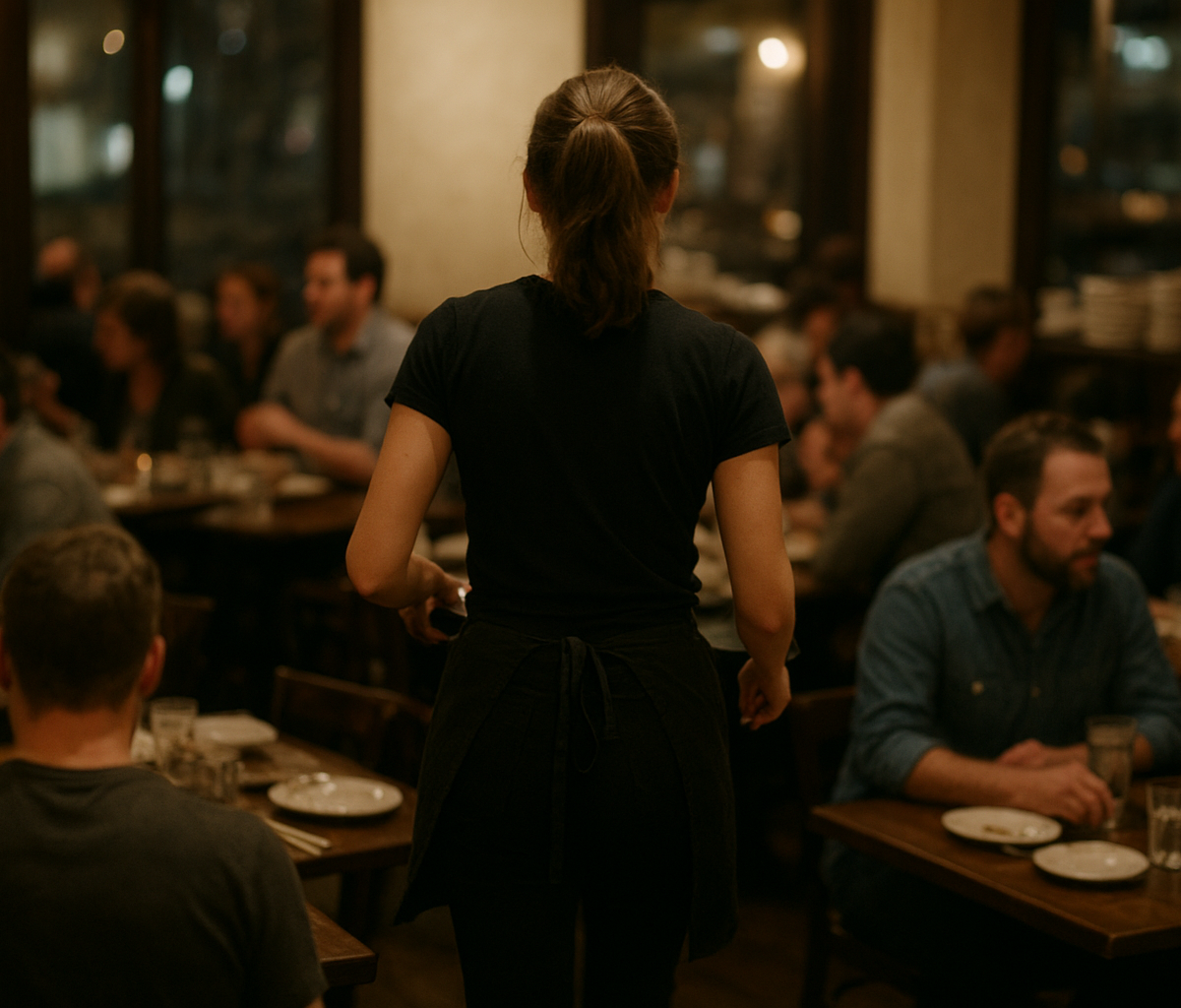
It usually starts at the worst possible time. A server calls out two hours before dinner, the reservation book is full, and the manager is suddenly redrawing sections, asking hosts to slow seating, and hoping the kitchen does not get buried. On paper, it is one missing person. In service, it is a chain reaction that hits revenue from three directions at once, fewer covers, lower guest spend, and more mistakes.
Most operators know short staffing is expensive. What often gets missed is how fast the loss stacks up. One understaffed shift in a full-service restaurant can easily cost hundreds of dollars, and on a strong night it can push well past $1,000 before the last table closes out.
How a server callout reduces revenue per shift
A missing server does not just remove one set of hands. It shrinks the dining room's effective capacity. If a server normally handles five or six tables and those tables are spread across the remaining staff, service slows almost immediately. Greeting times stretch. Drink orders take longer. Table turns slip by ten or fifteen minutes, sometimes more.
The math is not complicated. If a dining room loses the ability to turn even four tables during a dinner rush, and the average check is $75 to $120 per table, that is $300 to $480 gone right there. Add a bar program or desserts that usually land on a smoother service flow, and the missed revenue climbs further.
Then there is the quieter loss, the check average. When servers are overloaded, upselling usually disappears first. A rushed server is less likely to suggest a second round, an appetizer, or dessert. Guests who feel neglected also tend to order less and leave faster. A small drop in average spend across twenty or thirty tables can erase another few hundred dollars.
Short-staffed service slows table turns and ticket times
Front of house shortages do not stay in front of house. They hit the kitchen too. When sections are uneven and orders come in bunches instead of a steady pace, ticket times become less predictable. Expo gets squeezed. Food sits in the window waiting for hands to run it. By the time plates reach the table, the guest experience is already off.
This is where a no-show or callout creates a second wave of cost. Delayed service often leads to comps, voids, or discounts. A free dessert here, an appetizer removed there, maybe a drink comped to calm down a frustrated table. None of those decisions are unusual. They are standard damage control. But they still come straight off the night's margin.
Labor cost can also get distorted in the process. Managers may keep support staff later, call in overtime, or jump into the floor themselves and pull attention away from the rest of the operation. The shift gets covered, technically. The business still pays for it.
The online review damage from one bad shift
The most expensive part of running short-staffed often shows up later. Guests rarely write reviews that say, "The restaurant was down one server." They write that service was slow, food arrived cold, or nobody checked back. One rough Friday can produce review damage that affects bookings for weeks, especially for independents that live and die by local reputation.
This is why the real cost range can move from $500 into the $2,000 territory. Lost covers and comps are immediate. Reputation drag compounds. A lower star rating or a handful of fresh negative reviews can reduce future traffic long after the shift is over.
Better shift coverage starts before the callout
Operators who handle callouts best usually do two things well. First, they know exactly who is qualified to step into a section without creating more problems. Second, they can reach those people fast. A coverage plan that depends on one manager texting employees one by one is slow, and peak service does not wait.
That is where tools like Truvex fit into the picture. Instead of spending an hour chasing replies, managers can send one request to qualified off-duty staff and fill the gap while there is still time to protect the shift. The point is not convenience for its own sake. The point is preserving service capacity before the revenue leak gets worse.
How managers can estimate understaffing cost
A practical way to measure the damage is to review three numbers after every short-staffed shift, lost table turns, average check decline, and total comps or discounts. Add any overtime or extra labor pulled in to stabilize service. Most restaurants will find that what felt like a manageable scramble was actually a meaningful hit to margin.
Short staffing is often treated like an unavoidable headache. In reality, it is a measurable operating cost. Once that cost is visible, the decision to tighten shift coverage stops looking like an admin fix and starts looking like basic revenue protection.