June 28, 2026
How to Size Restaurant Staff by Shift
Learn a simple staffing formula using sales, covers, and kitchen capacity to set each shift with less guesswork and fewer labor surprises.

The problem usually shows up at 4:30 p.m. The prep list is half done, reservations are climbing, and the floor plan says one thing while the labor budget says another. Too many operators still build shifts by memory, habit, or whoever happened to be available. That works until it does not. Then service slows, ticket times stretch, and labor cost still ends up wrong.
There is a better way to staff a restaurant shift, and it does not require expensive software. A basic spreadsheet, solid sales history, and a few operating benchmarks are enough to get close to the right number most of the time.
Start with sales forecasting for each shift
Staffing starts with expected volume, not with the schedule template used last month. The cleanest method is to look at historical sales by daypart and day of week. Lunch on Tuesday should not be staffed like lunch on Saturday, and brunch deserves its own category entirely.
Most operators can build a usable forecast from the last six to eight comparable weeks. Pull sales for each shift, remove obvious outliers like holidays or private events, and calculate an average. If the operation tracks covers, include those too. Sales alone can mislead when menu mix changes. A shift with higher check averages does not always need more hands than a shift with lower averages and heavier table turns.
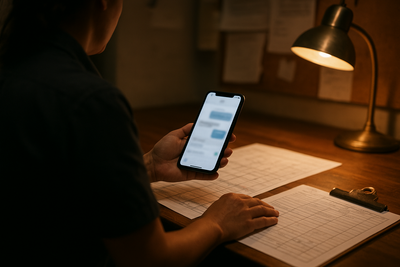
A simple spreadsheet can map columns for day, shift, historical sales, covers, average check, and actual labor hours used. That creates a baseline. From there, staffing becomes a math problem instead of a guessing contest.
Use covers per server to set front-of-house staffing
For front-of-house scheduling, one of the most practical benchmarks is covers per server. The exact number depends on service style, table size, support staff, and menu complexity, but every restaurant already has an internal range, whether it is documented or not.
For example, if a casual full-service dining room runs well at 25 to 30 covers per server on a normal dinner shift, and the forecast shows 120 covers, the floor likely needs four to five servers. If hosts, bussers, runners, or bartenders carry a larger share of the workload, that number may shift. The point is to tie staffing to expected demand, not to instinct.
This is also where many schedules go wrong. Managers often count bodies instead of roles. Five people on the floor means very little if all five are servers and nobody is assigned to greet, run food, or turn tables. Shift coverage has to reflect the actual flow of service.
Check kitchen output capacity before finalizing scheduling
Front-of-house numbers only matter if the kitchen can support them. A dining room staffed for 140 covers means nothing if the line can only produce 100 meals cleanly during the same window.
Kitchen staffing should be based on output capacity. Look at historical ticket counts, station load, average prep volume, and the time required for the menu mix expected that shift. A grill station handling burgers and steaks has a different ceiling than a saute station working six-pan pasta pickups all night. The same goes for dish capacity. If the dish pit gets buried, the whole operation feels short staffed even when labor hours look fine on paper.
A practical method is to identify the bottleneck station and staff backward from there. If one pantry cook can reliably produce 35 to 40 cold starters during a rush, and forecasted demand is 75, that station probably needs a second set of hands. This is blunt, but useful. The schedule is only correct if the slowest point in the system can keep up.
Build a minimum staffing level for callouts and no-shows
Once the ideal staffing number is set, the next step is defining the minimum acceptable coverage. That is the level below which service quality, safety, or speed starts to break down. Every manager knows that line, even if it has never been written down.
Documenting that minimum matters because callouts happen. When a worker drops off the schedule two hours before service, the question is no longer whether the shift is fully staffed. The question is whether the operation has fallen below the minimum needed to function. That is where a fast response process matters more than a perfect schedule.
Some operators still work the phone tree manually, texting one employee at a time and hoping somebody answers. Others use tools like Truvex to broadcast the opening to qualified off-duty staff at once, then choose from whoever accepts. The method matters less than the speed. A callout is expensive mostly because it wastes time before action starts.
Track labor cost against actual shift coverage
The spreadsheet should not stop at forecasted staffing. After each shift, compare planned labor hours, actual labor hours, sales, covers, and any service breakdowns. Over a few weeks, patterns become obvious. Maybe Friday lunch has been overstaffed for months. Maybe Thursday dinner always looks profitable until late ticket times force overtime in the kitchen.
This review process is what turns staffing into a system. Benchmarks get sharper. Scheduling gets easier. Managers spend less time arguing over gut feelings and more time fixing real constraints.
Restaurants do not need perfect forecasts. They need staffing decisions grounded in reality, adjusted often, and backed by a plan for when the schedule breaks. In this business, that is usually enough to stay ahead of the shift instead of chasing it all night.