November 5, 2026
Hotel Housekeeping Callout Coverage
Learn how hotels handle last-minute housekeeping callouts before room turns fall behind, with practical coverage tactics for tight checkout windows.
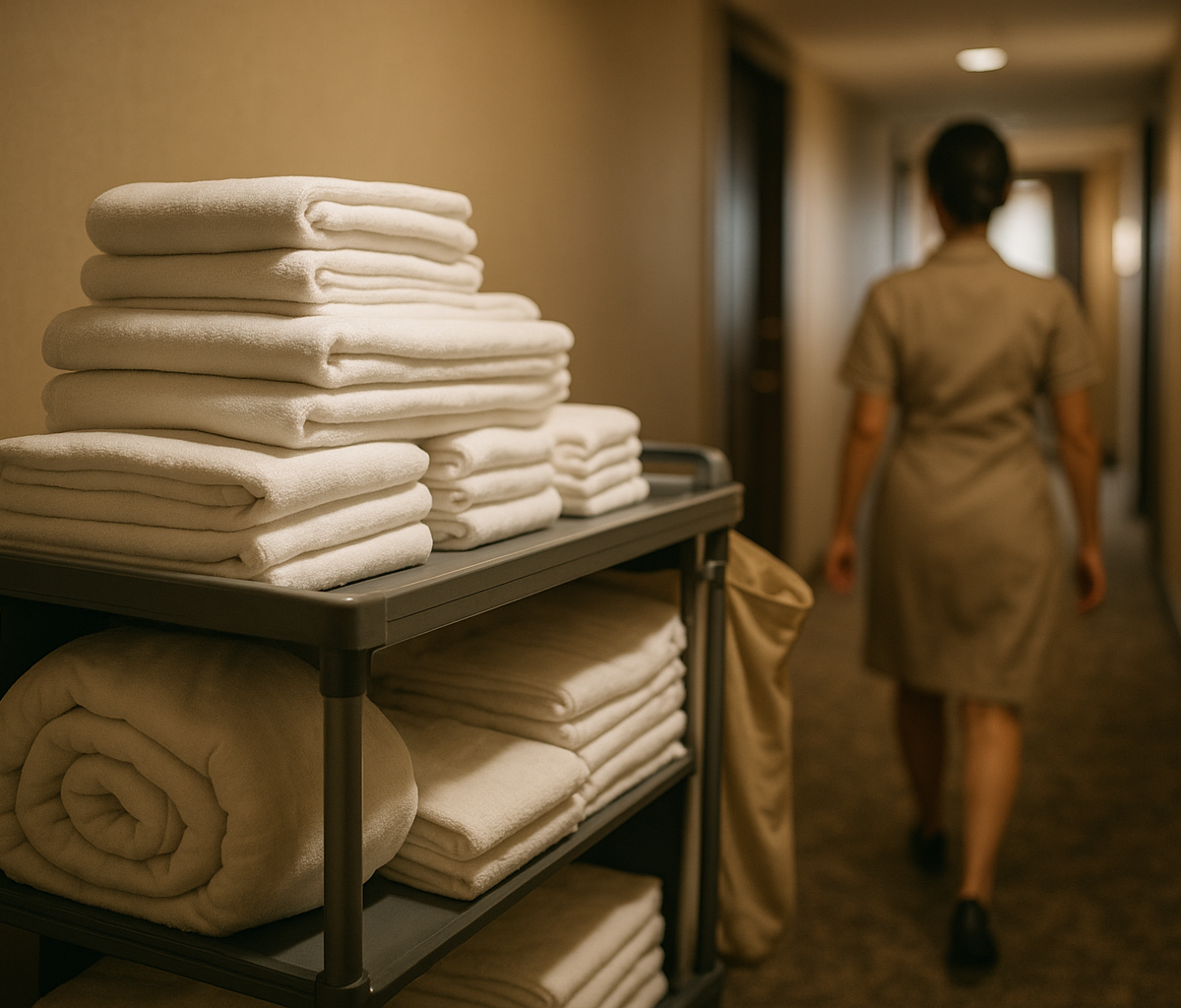
The call comes in at 6:12 a.m. A housekeeper is sick and will not make the shift. On paper, that is one absence. In practice, it can mean 13 or 14 rooms not turned on time, a front desk bracing for early arrivals, and an operations team doing math against the clock before breakfast service is even rolling.
Hotels do not absorb housekeeping callouts the way many other businesses absorb a missed shift. Rooms are perishable inventory. If they are not cleaned, inspected, and released in time, they cannot be sold. The gap between checkout and check-in is short, and there is very little slack built into it.
Why a housekeeping callout hits harder than other no-shows
In food service, a callout can often be patched with cross-trained staff, trimmed sections, or a manager jumping onto the floor. In hotels, housekeeping is tied to a fixed production window. Most departures happen in a tight block. Most arrivals do too. That means one missing room attendant does not create a small inconvenience. It creates a backlog that compounds by the hour.
If the standard board assigns 14 rooms per attendant, losing one person can force supervisors to split that board across an already full team. The result is predictable. Rooms come out later. Inspections get rushed. Front desk staff start promising delayed check-ins with drink vouchers and apologies. Guest satisfaction drops, and so does confidence between departments.
Shift coverage has to happen before the room-turn crunch
The usual approach, texting a few reliable people one by one, is often too slow for hotels. By the time someone answers, another 20 minutes may be gone. That matters when checkout is at 11 and the first wave of arrivals starts landing at 3, sometimes earlier.
Effective shift coverage in hotels depends on speed and reach. Managers need a way to alert every qualified off-duty housekeeper at once, not in sequence. That is where tools built for callout coverage can help. Some properties use systems like Truvex to broadcast an open housekeeping shift immediately by push notification and SMS, so available staff can respond within minutes instead of waiting for a phone tree to play out.
The point is not the app itself. The point is compressing the time between callout and confirmation. In housekeeping, that window decides whether the day stays recoverable.
Scheduling for callouts starts before anyone calls out
Coverage works better when the hotel has already defined who can be called, for what, and under which conditions. That sounds obvious, but many properties still rely on informal memory. One supervisor knows who likes extra shifts. Another knows who can clean suites. Someone else knows who has transport issues after 2 p.m. None of that helps much when the morning starts going sideways.
A stronger scheduling setup includes a current list of off-duty housekeepers, room-type qualifications, overtime limits, and realistic response times. It also helps to identify a small bench of part-time or flexible staff who prefer pickup shifts. In a hotel, availability is not enough. The replacement has to be able to step into the board without slowing the rest of the floor.
Labor cost control matters, but delayed rooms cost more
Some managers hesitate to call in coverage because labor cost is already tight. That concern is real. But delayed room availability has its own price, and it often lands across multiple departments. Front desk labor rises as agents manage complaints. Managers spend time juggling room status manually. Guest recovery costs add up. If a room stays out of inventory too long, the revenue loss is hard to ignore.
That does not mean every callout requires a full replacement. Sometimes the right move is a partial board reassignment, especially on lower occupancy days. But that choice should be deliberate, based on departures, stayovers, room mix, and arrival pattern, not made out of habit or wishful thinking.
Housekeeping coverage works best when front office is in the loop
One of the most common mistakes is treating a housekeeping callout as a housekeeping-only problem. It is not. The front office needs early visibility into any risk to room readiness. So does maintenance if out-of-order rooms might be rushed back into service to protect inventory.
When communication is tight, the hotel can prioritize clean rooms by arrival type, loyalty status, group blocks, and special requests. That does not solve the staffing problem, but it does reduce the damage. It also keeps the operation from making promises it cannot keep.
Hotels rarely get much warning when a housekeeper calls out. What separates a manageable day from a bad one is not luck. It is whether the property has a fast coverage process, a realistic staffing bench, and enough operational discipline to act before the room board starts slipping.