October 25, 2026
Friday Night Bartender No-Show Survival
Learn how bars handle peak-hour callouts, protect drink times, and find backup fast without blowing labor cost or burning out the team.
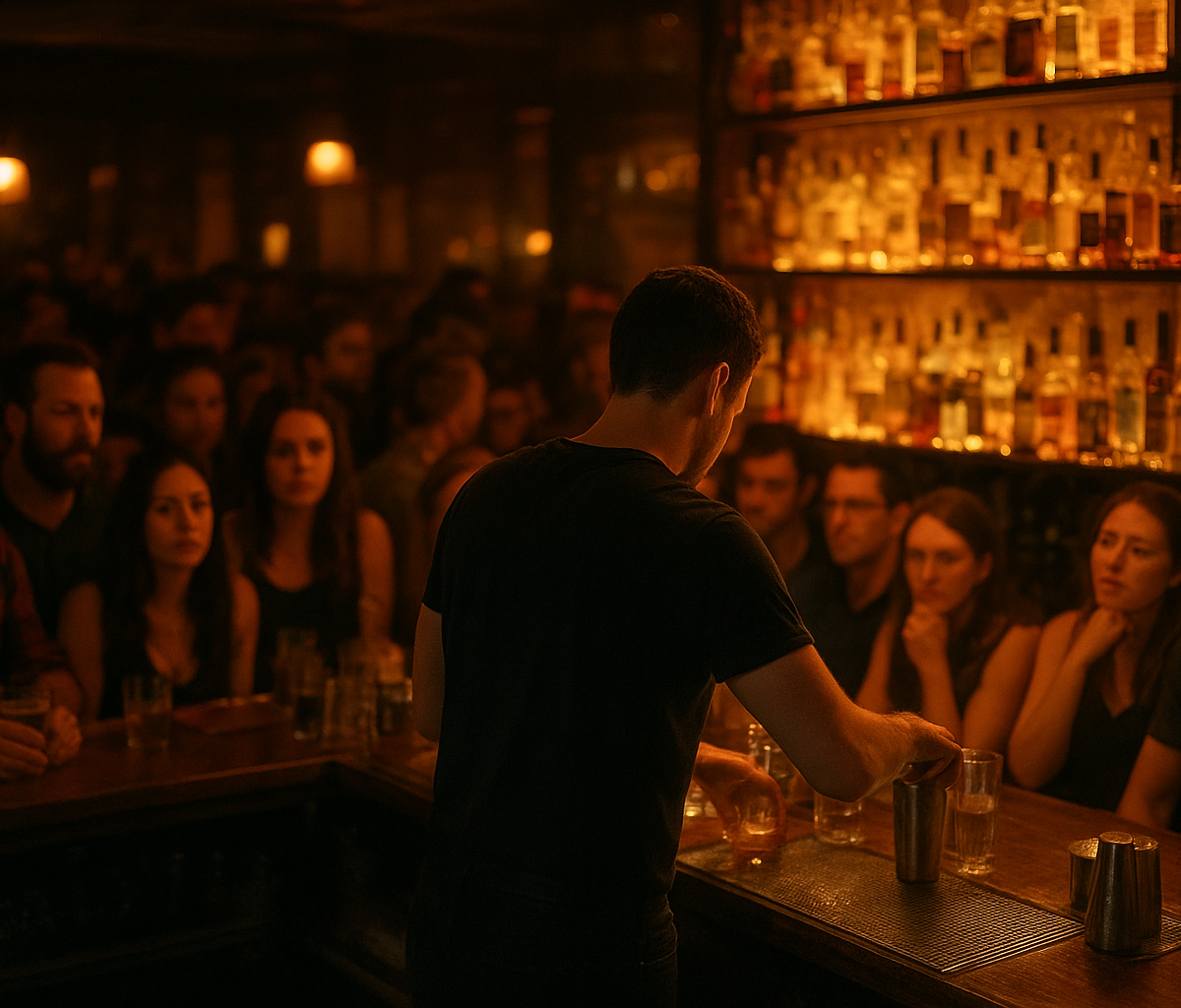
It is 9:02 p.m. on a Friday. The rail is three tickets deep, servers are stacking drink orders at the service well, and the closer just texted that they are not coming in. That is not a staffing problem on paper. It is a revenue problem happening in real time.
In a bar, a peak-hour callout hits harder than almost anywhere else in hospitality. Guests feel it within minutes. Drink times stretch. Simple cocktails turn inconsistent. Credit card slips pile up. The team still standing starts skipping steps just to keep the room moving. By 10 p.m., the busiest hours of the week can turn into a slow-motion salvage job.
Why a bartender callout hurts more during peak hours
A missing bartender at 3 p.m. can often be absorbed. A missing bartender at 9 p.m. usually cannot. Bar labor is not interchangeable once the room is full. One person may be strongest on high-volume beer and shots, another on service tickets, another on closing cash and inventory control. When one slot disappears, the rest of the system bends around it.
The damage is not limited to speed. It reaches check averages, guest satisfaction, and staff fatigue. When bartenders are slammed past capacity, they stop selling and start surviving. That means fewer upsells, more mistakes, more comps, and a greater chance that the next shift starts short because somebody burns out and calls off too.
Shift coverage needs a bar-specific backup plan
The bars that recover fastest usually do not improvise from scratch. They already know who can step in, how they will be contacted, and what role they can cover. That matters because a generic staff group chat is rarely enough. Half the team has notifications muted, someone is off the grid, and by the time replies come in, the rush has already peaked.
A better approach is to maintain a live backup bench of cross-trained bartenders, barbacks who can step up in a pinch, and former regular closers willing to pick up premium shifts. The contact method matters too. Some operators now use tools like Truvex to broadcast a callout instantly to qualified off-duty staff by push notification and SMS, then choose from whoever accepts first. In a Friday night emergency, speed beats elegance.
How managers handle a no-show before backup arrives
Even when replacement coverage is found quickly, there is still a 20 to 40 minute gap to manage. The strongest managers make immediate operational cuts instead of pretending the bar can run full menu, full service, and full standards with a missing station.
That may mean pulling one bartender fully onto service well, narrowing the cocktail menu to high-volume items, or having a floor manager handle water, simple pours, and payment support. In some rooms, temporarily pausing specialty drinks is the right call. Guests tolerate a limited menu more than they tolerate waiting 25 minutes for a vodka soda.
Communication matters just as much as labor deployment. Servers need a straight answer on ticket times. Door staff need to know whether to slow seating near the bar. Guests waiting at the rail should hear a calm explanation, not silence. People are more patient when the room looks organized, even under strain.
Scheduling for callout resilience without wrecking labor cost
Every bar wants protection against no-shows, but nobody wants dead payroll on a slow night. The answer is usually not overstaffing across the board. It is building flexibility into the highest-risk windows.
That can include staggered start times, an on-call bartender for known problem nights, or a barback scheduled with enough training to cover basic production if needed. Managers should also track callout patterns honestly. If the same shift, role, or employee group keeps causing trouble, that is no longer bad luck. It is a scheduling signal.
Technology can help here too, but only if it respects how bars actually operate. A fast-response shift coverage system is useful because it reaches multiple qualified people at once, instead of forcing one manager to text through a contact list while the room fills up. Truvex fits that practical need, but the broader lesson is simple, backup staffing has to move at bar speed.
Peak-hour staffing is really an operations test
A Friday night bartender no-show exposes whatever was already weak, training depth, communication, role clarity, or backup coverage. It also shows which bars have built systems that hold under pressure. The goal is not to avoid every callout. That is fantasy. The goal is to keep one missing person from taking the whole night down with them.
Bars do not get judged by how they perform when everyone shows up. They get judged at 9 p.m., when somebody does not.