September 3, 2026
When One Café Callout Cuts Staff in Half
Learn how small cafés handle a callout when one absence becomes a solo shift, with practical ways to protect service, labor, and staff burnout.
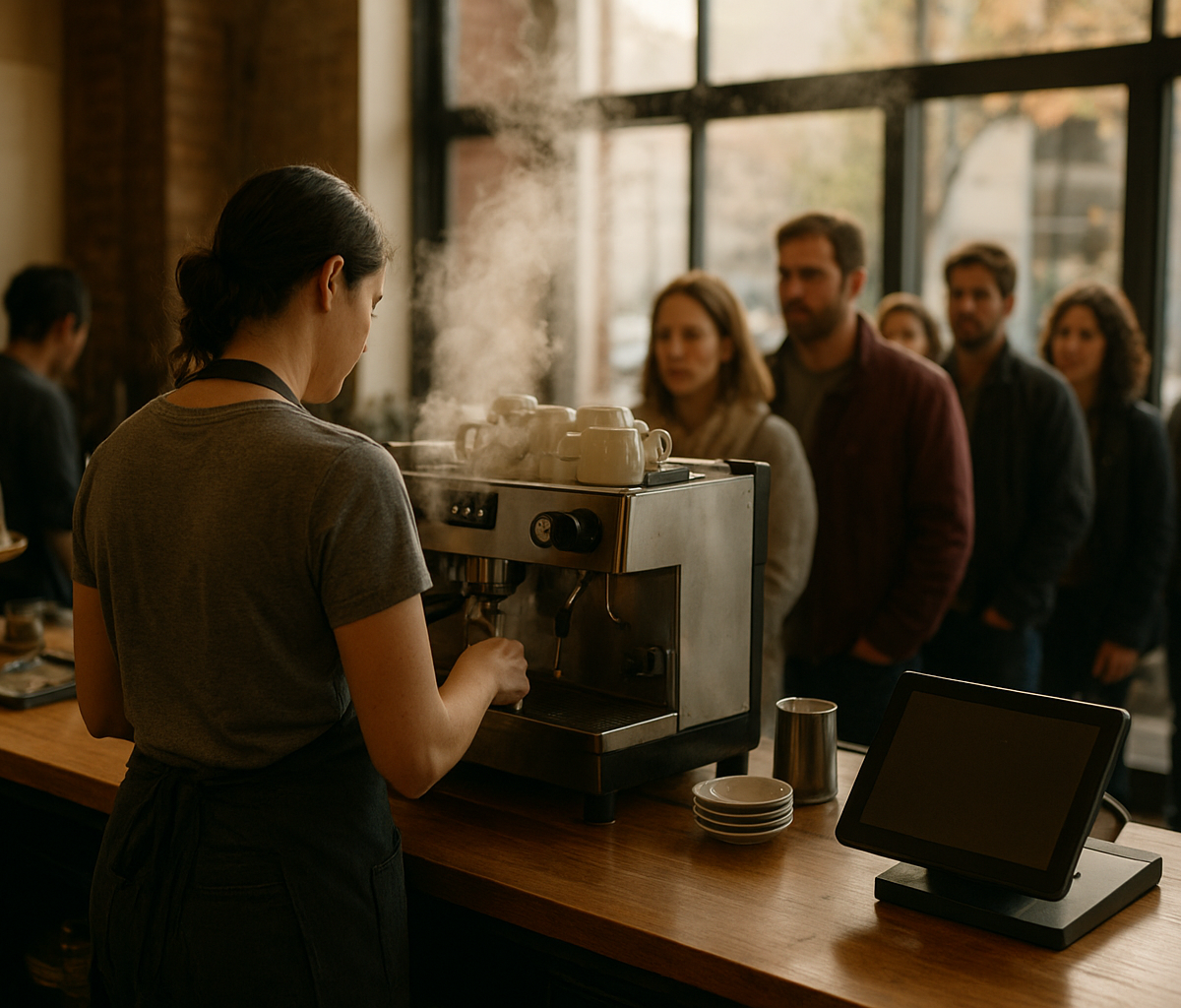
At 6:12 a.m., the text comes in. One barista is sick and the doors open in less than an hour. In a large restaurant, that is a staffing problem. In a small café, bakery, or boutique counter-service shop, it can turn the entire shift upside down. A two-person open suddenly becomes one person handling espresso drinks, register, mobile orders, pastry restock, and the customer line at the same time.
That is the reality for small teams. Losing one person does not just make the shift harder. It can remove 50 percent of the labor planned for that block, and there is usually no extra body tucked away in the schedule to absorb the hit.
Why a café callout hits harder on small teams
Small operations are built lean on purpose. Margins are tight, traffic is predictable only up to a point, and owners often schedule to the minimum headcount needed to open safely and serve at a decent pace. That works until a callout lands on a morning rush or lunch push.
In that moment, every task becomes a bottleneck. Milk runs low. The pastry case gets patchy. The register line slows because the same person steaming drinks also has to explain modifiers, warm food, and clean a spill near the handoff counter. Customers usually notice the wait before they notice the reason.
The bigger risk is not just slower service. It is operational drift. A solo worker starts skipping non-urgent cleaning, delaying prep, and taking shortcuts just to keep orders moving. That may save the next ten minutes, but it often creates a rougher close, a weaker next shift, and a more burned-out employee.
Shift coverage needs to happen in minutes, not after the rush
For small teams, the old method of calling people one by one is too slow. By the time a manager reaches the third or fourth person, the line is already out the door. Fast shift coverage matters most in the first fifteen minutes after the callout, when there is still a chance to prevent the shift from collapsing into survival mode.
This is where many operators are changing process, not just schedule. Instead of relying on memory and group texts, some use tools like Truvex to alert all qualified off-duty staff at once by push notification and SMS. In a team of eight or ten, that matters. Someone who is off that morning may want the hours, but that only helps if the opening reaches them immediately.
Technology alone does not solve the problem, but speed does. Small teams recover better when the entire roster can function like a rapid-response bench, even if that bench is only a handful of people.
What to do when no-show or callout coverage does not come through
Sometimes nobody can take the shift. That is the brutal version of small-team scheduling, and pretending otherwise wastes time. When coverage fails, the next move is controlled triage.
Managers generally have three levers: reduce the menu, reduce service channels, or reduce hours for a short window. A café may pause blended drinks, shut off online ordering for thirty minutes, or move to drip coffee only during peak congestion. A bakery may stop custom sandwich builds until a second person arrives. None of those choices feel good, but they are better than letting one person drown while service quality falls apart everywhere at once.
Clear communication matters here. A simple sign at the register and a direct line from staff, short staffed this morning, thanks for the patience, usually lands better than silence and confusion. Customers can tolerate a wait. What they do not tolerate well is disorder.
Scheduling for callout risk without blowing labor cost
Small operators cannot schedule an extra floater every day just in case. Labor cost does not allow it. But there are ways to build a little shock absorption into the week.
One common approach is to identify the most fragile shifts, usually open, weekend brunch, and any block where one absence cuts staffing in half. Those shifts need the deepest availability bench, cross-trained staff, and the fastest communication plan. Another is to make sure at least one person beyond the core opener can step into both register and drink production, rather than only one station.
Cross-training is not glamorous, but it is what keeps a small shop from stalling. The strongest small teams are not always the ones with the most people. They are the ones where more than one person can carry the shift for an hour if things go sideways.
A café down to one barista is not a rare emergency. It is a predictable stress point in a business model with zero margin for absence. The shops that handle it best usually are not luckier. They are simply more honest about how fast a small-team shift can unravel, and more prepared to respond before the first rush hits the bar.